

Spend less time emotionally regulating clients.
Make more progress in every session.
Color Mending is an emotional regulation tool you can put in your clients' hands today. They learn to identify, understand, and move through emotions on their own, so they show up to your sessions ready to do the deeper work.
The problem
The problem

The #1 pain point we hear from therapists and coaches
Most of your session time is spent getting clients ready to work.
❌ You’re helping them get out of their head and into their body.
❌ You’re walking them through feeling their feelings.
❌ You’re guiding them to find language for what’s happening inside.
It’s essential work. And, it eats up all your time together.
What if your clients could do this work before they walked in?
What is Color Mending?
Color Mending is a neuroscience-based emotional regulation tool that teaches clients to identify and interpret their own internal emotional signals, without needing to talk about it first.
This simple tool is grounded in Dr. Lisa Feldman Barrett's Theory of Constructed Emotions and peer-reviewed interoception research (read this blog post for more).

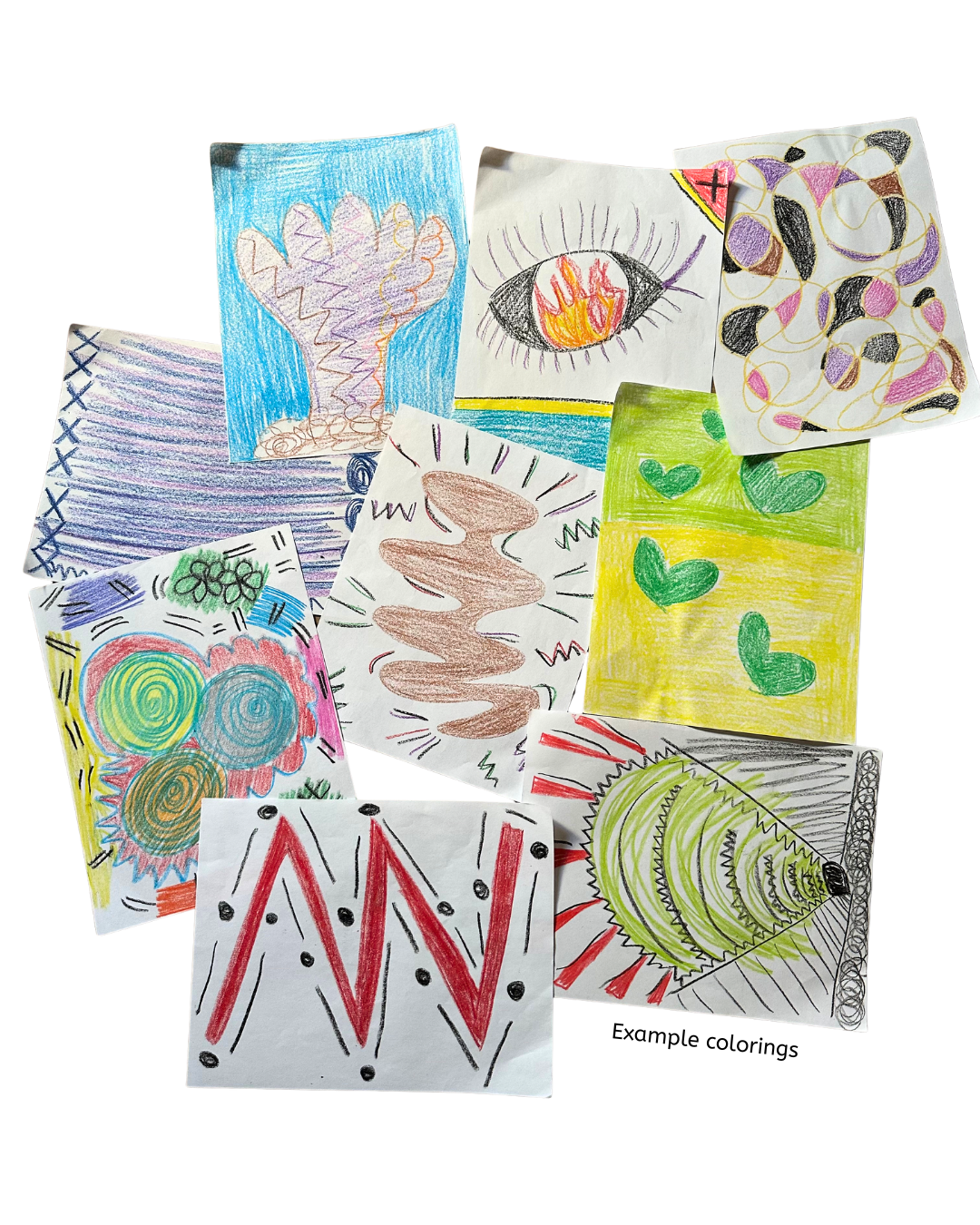
Here's how it works: clients color out how they currently feel, then use proprietary charts to interpret their coloring. Through this process, they learn to:
Label the emotion they're experiencing
Understand where it came from and why it's there
Move through emotions productively
It's not art therapy. It's not a relaxation technique. It's a repeatable, skill-building tool that gives clients the language and self-awareness to show up ready for deeper work.
Color Mending has been used since 2019 with over 300 people across all genders, ages, and neurotypes.
The benefits
The benefits
What Changes When Your Clients Use Color Mending
For you
😌 Clients arrive emotionally regulated. They’ve sat with their feelings, understand the what and why behind them, and have language to tell you about it.
📈 Faster progress. Sessions shift from coping to transforming. Your clients make sense of their inner world between visits, not just during them.
🤝 Less burnout. Clients learn to partner with you, not depend on you.
💪 More sustainable outcomes. Clients build the self-regulation skills necessary to integrate insights and build upon their progress.
💵 Additional revenue. Get paid for every client you refer through the Color Mending affiliate program.
For Your Clients
🖍️ Meets them where they’re at. Clients only color what they’re ready to look at. No pressure to revisit trauma. No requirement to find words before they’re ready.
🔎 Teaches clients to look inward first. Instead of immediately reaching for co-regulation, clients learn to check in with themselves and build trust with their own body signals.
💪 Builds emotional literacy. Through repetition, clients move from “I don’t know how I feel” to “I’m feeling grief about my childhood. It’s showing up as anger towards my partner.”
📢 Shifts clients from stuck to self-aware. Clients stop asking, “Why is this happening to me?” and start asking, “What is this emotion trying to get me to see?”
2 ways to Bring COlor Mending to your practice
Affiliate program

Refer clients. Earn income.
Watch them show up more prepared.
You don't need to learn Color Mending to benefit from it.
Refer your clients to The Coloring Bet, Color Mending's 21-day training program, and Chelsea teaches them the methodology.
They show up to your sessions more regulated. You earn 10% commission on every purchase made through your affiliate link.
No time investment required. Just better sessions.
Best for: Practitioners who want clients to have this skill but prefer to focus on their own modality
Professional certification

Learn Color Mending Yourself and Use directly with clients.
Become a Color Mending Certified Practitioner and integrate the methodology into your sessions.
Once certified, you can use Color Mending as a standalone tool or alongside your existing modality/training.
Certified practitioners earn 15% commission on affiliate referrals and have the rights to use Color Mending professionally with clients.
Best for: Practitioners who want to facilitate Color Mending sessions and integrate this methodology into their practice
Not sure which is right for you? This free demo is the best place to start.
Grounded in Neuroscience
Grounded in Neuroscience
Grounded in neuroscience. Built for real-world application.
Color Mending has not been the subject of its own clinical study (yet!), but it is built on Dr. Lisa Feldman Barrett's Theory of Constructed Emotions and peer-reviewed interoception research.
The core idea of the science:
Emotions aren't hardwired reactions.
They're predictions your brain makes based on internal signals and past experiences.
Color Mending teaches clients to become aware of these signals and reinterpret them, giving them agency over their emotional experience.
Color Mending has been used in clinical settings since 2019.
Color Mending works great for clients who…

✅ Struggle to name what they're feeling
✅ Need concrete tools, not just talk
✅ Get stuck in their head and can't access their body
✅ Process better through visual or hands-on methods
✅ Are emotionally flooded and need to ground before going deeper
✅ Shut down when asked to journal or free-write
Case studies & testimonials
Case studies & testimonials
“One Color Mending session with a client’s mom gave her space to process her anxiety, and gave me more clinical insight than weeks of sessions. I didn’t expect both to happen at once.”
“Color Mending has been instrumental in helping me confirm that what we’re doing in therapy is what my clients need most.”
“Having a tool to use when my students don’t want to talk is incredibly helpful. This tool has helped me build trust with my most reserved students.”
“This tool reminded me that I have a strong intuition and I can trust it not only for myself but for my clients. It’s also helped me break down barriers between myself and my clients.”

FAQs
-
Art therapy focuses on creative expression; the art itself is the therapy.
Color Mending uses coloring as a tool to access interoceptive signals, then teaches clients to interpret those signals using structured charts. The coloring isn't the therapy; the awareness and interpretation are.
-
Somatic therapy focuses on body-based awareness and releasing stored trauma through physical sensations and movement.
Color Mending focuses on teaching clients to identify and interpret their internal emotional signals (interoception) so they can understand and articulate their inner world.
Somatic therapists use Color Mending as a complementary tool.
-
Color Mending is designed to complement your existing practice, not replace it. Most practitioners use it as a between-session tool or as a way to help clients prepare for deeper work in sessions.
-
Most clients who say they "don't like coloring" or "aren't creative" enjoy using the tool once they understand it's not about making something pretty, it's about accessing their internal signals.
Color Mending doesn’t require artistic abilities.
-
No. We work with licensed therapists, counselors, coaches, and community helpers.
If you work with people who would benefit from emotional regulation skills, you're a fit.
-
Absolutely. That's exactly what the demo is for.
You'll experience a personal Color Mending session firsthand, ask questions about your practice, and leave knowing whether it's the right fit.
Your Next Step
Your Next Step
Ready to See What Color Mending Can Do for Your Practice?
The best way to understand whether Color Mending is right for your clients is to try it for yourself.
Schedule a free demo. You'll experience a personal Color Mending session, and we'll talk through how it could work in your practice.
No pressure. No pitch. Just a genuine conversation.