The research behind Color Mending: Six years, thousands of people, and a very honest account
I want to be upfront about something before you read any further.
Color Mending is not third-party validated. There is no randomized controlled trial. No peer-reviewed study with my name on it. No institutional stamp of approval… yet.
Here’s what there is:
six years of obsessive curiosity,
thousands of conversations,
hundreds of professional interviews,
a rigorous personal research process,
and over 300 people across a wide range of ages, backgrounds, and life stages who have used this tool and reported what happened.
That is not nothing. And it is also not everything. Both of those things are true, and I think you deserve to know both.
Here is the full, unabridged account.
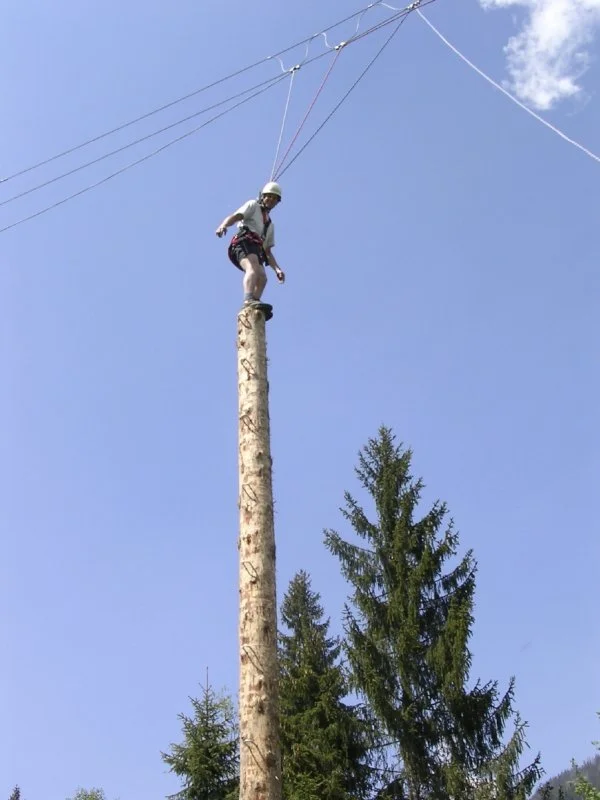
It started with a scream from the top of a thirty-foot pole
In 2018, I completed a year-long certification program in the Integrative Processing Technique (IPT). IPT is a modality that uses guided visualizations to move through and reframe traumatic experiences. For the certification, I spent thousands of hours not only working through my own history, but guiding others through theirs.
The results were real. People were having genuine breakthroughs. And yet, at the end of that year, I noticed three things that felt deeply off.
First, I was still living in the future or the past. I could not feel settled in the present moment.
Second, I was still playing the victim. I could trace my patterns back to my great-grandmother’s decisions, to cultural expectations, to specific traumatic events. I had an explanation for everything. What I could not see was my own role in how my life was unfolding.
Third, I was still relying on other people to make sense of what I was feeling. If you had asked me directly, “How are you feeling, right now, in this moment?” my honest answer would have been, “I don’t know.”
The moment that crystallized all of this came at the very end of the certification program. We did a ropes course. With my intense fear of heights I willed myself to climb a thirty-foot pole, stood at the top with a harness on, and before jumping off, I had to yell out my greatest desire.
I screamed: “I just want to feel inner peace.”
The irony of what I screamed did not hit me until I was safely back on the ground.
I had just spent a year and thousands of hours and dollars working on myself and working with other people, guiding them through some of the hardest emotional work of their lives. And I was standing in the exact same place I started. Unsettled. Out of my body. Hypervigilant, always waiting for the other shoe to drop, unable to just be present.
I could not understand why.
So I started obsessively looking for the answer.
Everything I tried before I found the answer
Before Color Mending, I tried a lot of things. I want to name them honestly, because I think it matters for people who have also tried a lot of things and still feel stuck.
I ran ultra marathons. A half Iron Man. 5Ks and 10Ks. I got physically regulated. Some emotions that were stuck in my body moved through the repetition of intense physical effort. But exercise did not get to the root of what was driving my patterns.
I worked with healers of all kinds: past life regressions, chakra balancing, energy work, Chinese medicine, ThetaHealing. Each of them helped me at the surface level. Each of them made me better at identifying where to place the blame for how I was feeling. None of them helped me read my own emotional experience in the present moment.
I tried shadow work. I spent 3 years and tens of thousands of dollars working with a shadow work coach. And here is where something interesting happened: instead of answering the journal prompts the way I was supposed to, pen to paper, I started coloring how I felt. I would think about the prompt, tune into my body, and color it out. I consistently made more progress and had more clarity from the coloring than from trying to articulate answers in writing. I could not explain why at the time. I just knew it was working.
I tried journaling, including morning pages from The Artist’s Way. It cleared the mental chatter temporarily. But by end of day, the same static was back. The words were available to me. My body’s signals were not.
I was so intimidated by talk therapy that I did not even book sessions. I could not articulate what I was feeling, which meant I could not imagine sitting across from a therapist and being asked to describe my inner world to them. The skill gap was too wide.
What every single one of these approaches had in common: they worked from the outside in. They gave me better language, better explanations, better insight into my patterns. None of them taught me to receive and read what my body was actually signaling in the present moment.
That skill, being able to label and read my body signals in real time, had a name. I just did not know it yet.
What thousands of people told me they were experiencing
As I began testing the coloring approach with more people and formalizing it into a methodology, I started asking a single question at the beginning of every interaction:
“How would you describe your relationship to your emotions?”
I asked it to thousands of people. And I started noticing that the answer told me almost everything I needed to know about where they were.
What I did not expect was how consistently the answers fell into the same pattern. 70% of people described their relationship to their emotions as confusing, overwhelming, distant, or something to be suppressed and managed. Only 10% described it as open, masterful, curious, or full of gratitude.
What surprised me most was not the percentage. It was who fell into that 70%.
Some of the most confident, accomplished, put-together-presenting people I spoke with had had the most distant and cold relationship to their emotions. The confidence, I began to realize, was often a way of compensating for an inner world they could not access or trust. The high achievers. The overachievers. The people who looked like they had it figured out. They were, in many cases, working the hardest to avoid feeling what was actually happening inside them.
I recognized myself in all of them.
What licensed professionals told me was missing
I interviewed hundreds of licensed professionals while developing Color Mending. Therapists, social workers, occupational therapists, life coaches, counselors, and speech-language pathologists.
The thing that shifted my understanding most was this: 85% of them told me they spent the majority of their session time not doing the deeper clinical work, but simply trying to get the client regulated. They spent multiple sessions just getting the client to feel the feeling. To stop running from it. To understand that it was safe to be present with it.
I was interviewing these professionals at the same time I was surveying individuals about their relationship to their emotions. So I began asking a follow up question: “Have you tried therapy?” The most common response was that therapy felt like an expensive tool that minimally helped.
When I put those two things together, the picture became very clear.
If you cannot receive and read your own body’s signals clearly, you are going to spend most of your therapy sessions just trying to get regulated enough to access the material you are there to work through. And that is going to feel slow. And expensive. And like something is missing.
Not because therapy is wrong. Because the prerequisite skill is not yet in place.
Color Mending was built to be that prerequisite.
The science that explained what I was already seeing
For most of the six years I spent developing Color Mending, I did not have scientific language for what I was observing in myself and my clients. I documented the patterns I was observing. I had hundreds of people telling me they finally felt understood and present in their bodies. I did not have a framework that explained the mechanism.
In February of 2025, I found it.
I came across Dr. Lisa Feldman Barrett’s Theory of Constructed Emotions and Kelly Mahler’s interoception research within weeks of each other.
I came across their research after I became frustrated at trying to make the triune brain model fit my Color Mending observations. No matter how I tried to force it to make sense, it never made sense.
I decided to start from scratch and look for other theories. This is when I came across Barrett, and a friend recommended I look at the work Mahler is doing.
Reading both of their work felt like finding the missing puzzle pieces.
Barrett’s research established in precise scientific language what I had been observing: emotions are not hardwired reactions. They are constructions the brain builds from interoceptive body signals, filtered through past experience and current context. When your interoceptive awareness is underdeveloped, the brain cannot receive accurate signals, which means the mental models it uses to interpret experience go unexamined and unchanged.
Mahler’s research established that interoception is a trainable skill. It can be developed at any age. The body-brain connection strengthens with consistent, non-judgmental attention to physical sensation.
Color Mending had been building interoceptive awareness all along. And I finally had the neuroscience to explain why.
What happened when people colored instead of visualized
One of the most important comparisons I made during the development of Color Mending was between guided visualization sessions and coloring sessions. I was certified in IPT, which uses extensive 90-minute guided visualizations that require closing your eyes, being skilled at visualization, and revisiting traumatic experiences.
Here is what I observed with coloring that did not happen with visualization.
Coloring did not require the person to go back in time. It stayed in the present. It focused on whatever the body was signaling right now, which in practice tended to be the most important mental model the person was ready to update, not necessarily the one the practitioner selected or the one the protocol prescribed.
It did not require language. It did not require the person to be a skilled visualizer or to sit still for 90 minutes. It required only that they tune into their body and respond honestly to what they found there.
It was faster. Most Color Mending sessions produce a meaningful insight in 20 to 30 minutes. And unlike revisiting traumatic events, it does not retraumatize. It creates a map of the present moment, what is most alive in the body right now, what it is pointing toward, and what shift might be possible.
And it puts the interpretation in the person’s own hands. This part mattered more than I could have imagined.
What I observed across more than 300 people
Over six years, I have worked with people ranging from 5 years old to 85. Different genders, different life stages, different backgrounds, different levels of prior emotional work. A few patterns appeared so consistently that I now consider them defining features of what Color Mending does.
Almost everyone came in believing their emotional experience was unique to them. Almost everyone discovered, in the process of coloring and decoding, that they were not as alone in their inner world as they thought. The themes that showed up most often: self-worth and the search for internal versus external validation, navigating grief and anger without suppressing them, and being willing to see the part they themselves were playing in their circumstances.
Almost everyone was in their head. The intellectualizing was nearly universal. People could explain their emotions at length. Very few could feel them accurately in the body in the present moment. Color Mending consistently short-circuited the explanation and went directly to the sensation underneath it.
The light bulb moment, when it came, almost never arrived with shame. That surprised me more than almost anything else. When people decoded their colorings and saw what their body had been trying to show them, the most common response was something like: “Oh. That’s what that is.” Neutral. Curious. A kind of gentle recognition rather than self-criticism. The tool seemed to invite self-compassion almost structurally.
And the simplest colorings were often the most profound. A few shapes. A handful of colors. Enough to surface something the person had been carrying for years and could not previously see clearly.
What the tool does not do
Color Mending creates a map of your inner world. It does not travel the journey for you.
It does not diagnose. It does not treat. It does not build skills for you. What it does is make visible what was previously unclear. Specifically, what emotion is present, why it is there, and what mental model may be underneath it. It then hands that information back to you.
What you do with the map is entirely up to you. You might decide to bring it to a therapist. You might work with a coach, a healer, a nutritionist, or a fitness professional. You might identify a skill gap and find the right person to help you close it. You might simply sit with the awareness for a while.
Color Mending will not heal you. Nothing does that for you. What it will do, practiced consistently and honestly, is give you a clearer picture of your inner world than most people ever get to see.
What people have reported
Color Mending is not yet third-party validated, so I want to be precise about how I describe what follows. These are real accounts from real people who have used the tool. They are not a controlled study. They are not a data set. They are what happened.
A client processing trauma after a triggering event
One of my long-term clients was triggered at a holiday party by a song that had been playing during a childhood trauma. She left, went home, and colored. She did not try to suppress what she was feeling. She let it go onto the page.
After coloring, she was able to call her therapist and describe, with specificity, exactly what was happening in her body, what she was feeling, and what she needed. Her therapist immediately recognized complex PTSD, and later told her that because she could articulate her experience so clearly, she was able to meet her exactly where she was and choose the right tools and strategies immediately.
The client described what followed as the lifting of a fog she had been living in for years. She reported a lightness and a genuine hope she had not felt in longer than she could remember. She credited Color Mending not with fixing anything, but with giving her the language to advocate for herself. “It really works,” she wrote to me. “It gave me the language to advocate for myself.”
→ Read her full story: From Triggered to Hopeful
A mother and her five-year-old son
Amber G. discovered Color Mending during a period of personal growth, using it to break out of overthinking spirals and get to the root causes underneath her mental loops. She then introduced it to her five-year-old son Lucas during a season of significant family change: her husband changing jobs and a new sibling arriving.
Lucas did not like to talk about big feelings. Color Mending gave them a natural starting point. In one memorable session during the transition, he colored two pages. The first reflected how much he loved being a big brother. The second showed, through shapes and colors, that he was missing one-on-one time with his parents. That single session gave Amber and her husband the specific information they needed to support him.
“It’s helped me create a better relationship with Lucas by giving me a clearer picture of what he’s experiencing,” she said. “The beauty of it is that it doesn’t take very long, and it creates a strong communication bridge between us.”
→ Read her full story: Using Color Mending to Navigate Family Transitions with Toddlers
A licensed social worker working with neurodivergent children
Andrea Call, MSW, works primarily with neurodivergent children ages 4–14 who resist traditional talk therapy. She introduced Color Mending as an alternative way to access what her clients were carrying emotionally.
One of her most memorable sessions was with a 14-year-old who had mastered the art of suppressing emotions. During the session, the client colored a cowboy riding a horse. As they decoded the coloring together, the image began to mirror exactly what was happening in the client’s current life and inner world. The client had a significant breakthrough, not only seeing that suppressed emotions stay present until they are worked through, but also discovering that they did not have to use words to process them.
Andrea also reports using Color Mending to validate treatment plans. “It’s helpful to have a tool to confirm what I’m observing in my clients,” she said. “When clients don’t want to talk or use traditional forms of therapy, this helps me see the emotions, mindsets, and patterns that are top of mind for them and that they’re ready to work through.”
→ Read her full story: Using Color Mending to Process Emotions in Therapy
A school counselor working with students from challenging backgrounds
Ms. Krier, a school counselor in Denver working with 3rd through 8th-grade students from low-socioeconomic environments, found that her students had learned not to trust adults. She used Color Mending as a self-led tool that placed the interpretation in the student’s own hands.
One student had refused to speak with her in any one-on-one session. Ms. Krier asked if she would be open to a coloring activity, told her she did not have to talk, and the student agreed. She colored seriously. She led herself through the interpretation using the proprietary Charts. She wrote a great deal. She said she really liked it.
A few days later, that same student came back to Ms. Krier’s office and opened up. “She just started to talk about everything,” Ms. Krier said. “I attribute her being willing to talk to Color Mending. It helped her see that I have tools to help her work through the pain, and helped build trust between her and I.”
→ Read her full story: Using Color Mending to Build Trust with Students
A third-grade teacher using Color Mending for classroom SEL
Ms. Moog, a third-grade teacher in the Twin Cities working with students from low-socioeconomic backgrounds who were still processing the effects of pandemic-era disruption, introduced Color Mending as a weekly 20-minute practice. Most of her students could not label their feelings, which made traditional emotional conversations difficult.
Over three months of coloring one time per week as a transition activity, she observed students becoming better able to process emotions, recognize when they needed a break, and advocate for themselves. Students who were experiencing intense emotions on coloring days used the practice actively, coloring intensely, or in some cases ripping up the paper at the end. The tool met them exactly where they were.
“For my students who actively participate in Color Mending, they are able to process emotions better and have become better advocates for themselves,” she said. “They now have the awareness of when they need to take a break and destress.”
→ Read her full story: Using Color Mending to Help Students Process Emotions
Where things stand and where they are going
Color Mending is not yet third-party validated. I want to say that clearly and without apology, because I think it is more important to be honest about what we know and what we do not know than to overstate the evidence.
What I can say with confidence: the tool works consistently across a remarkably wide range of ages, populations, and contexts. A five-year-old and an 85-year-old. A neurodivergent child who won’t speak and a high-functioning adult who cannot stop analyzing. A school counselor in Colorado and a licensed social worker in Utah. A mother processing overthinking spirals and a trauma survivor finding the language to advocate for her own healing. The consistency of what people report is not accidental.
Third-party validation is actively on my priority list. The more people who use Color Mending, the clearer the data set becomes. The more practitioners who integrate it into their work, the more opportunities exist for formal study. That work is coming.
In the meantime, the user stories on this site are what I have to offer as evidence. They are real people, describing real experiences, in their own words. They are not a controlled study. They are what happened.
I built this tool because I could not find anything that taught me to read my own inner world without relying on someone else to interpret it for me. I built it slowly and carefully, testing it with real people across six years, before I was willing to put it out in the world. I found the neuroscience that explained why it works. And I keep building it, because the more I learn, the more I understand how much this skill matters.
Emotions are clues. Color Mending is how you learn to read them.
That is what the research shows. And I am just getting started.
Want to experience Color Mending for yourself?
The best place to start is the free guide, which walks you through the neuroscience behind Color Mending and shows you exactly what the process looks like in practice.
If you want to learn how to guide yourself through Color Mending sessions, The Coloring Bet was made for you. During this 21-day program, you practice the Color Mending process from start to finish until reading your body signals begins to feel second nature.